Contenido
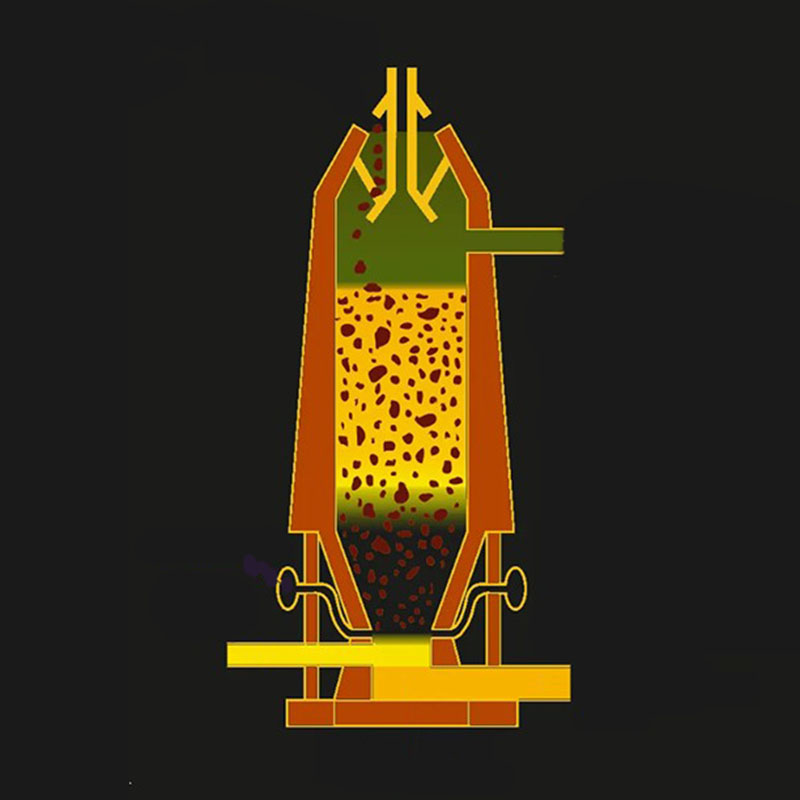
A horno de fundición Es un recipiente industrial de alta temperatura que extrae metal puro del mineral o refina chatarra combinando calor intenso con un agente reductor y un fundente. . El calor rompe los enlaces químicos en el mineral, el agente reductor (normalmente carbono, en forma de coque) elimina el oxígeno y el fundente (a menudo piedra caliza) se une a las impurezas de la roca para formar una capa líquida separada llamada escoria. El resultado son dos capas fundidas distintas: metal purificado en el fondo y escoria flotando en la parte superior, que se puede extraer por separado.
Los hornos de fundición no tienen un diseño único: el horno adecuado depende del metal que se procesa, la materia prima (mineral en bruto versus chatarra reciclada) y el volumen de producción requerido. Los altos hornos dominan la producción de hierro y acero, los hornos de arco eléctrico y de inducción manejan metal reciclado y aleaciones especiales, y los hornos de fundición instantánea son el estándar para el cobre.
Seis diseños de hornos representan la inmensa mayoría de la capacidad de fundición industrial en todo el mundo. Cada uno equilibra la fuente de energía, el costo de capital y la pureza del metal de manera diferente.
| Tipo de horno | metales primario | Temperatura de funcionamiento típica. | Fuente de energía |
|---|---|---|---|
| alto horno | hierro | 1.200–1.600°C | Coque (combustión de carbono) |
| Horno de arco eléctrico (EAF) | Acero (chatarra reciclada) | 1.600–1.800°C | arco electrico |
| Horno de inducción | Aleaciones de acero, cobre y aluminio. | Hasta 1.800°C | Inducción electromagnética |
| Horno de reverbero | Cobre, plomo, aluminio. | 1.000–1.200°C | Quemadores de gas o gasóleo |
| Horno de cúpula | hierro fundido | 1.300–1.500°C | coca cola |
| Horno de fundición flash | Cobre, níquel | 1.200–1.300°C | Concentrado de aire enriquecido con oxígeno. |
A pesar de las diferencias de diseño, casi todos los hornos de fundición comparten los mismos componentes funcionales:
Independientemente del tipo de horno, la secuencia de fundición sigue las mismas seis etapas:
Un horno debe alcanzar un nivel muy superior al punto de fusión del metal para mantenerlo lo suficientemente fluido para la fundición y la separación de impurezas. Las temperaturas de funcionamiento suelen oscilar entre 100 y 300 °C por encima del punto de fusión puro. para compensar los elementos de aleación y la pérdida de calor.
| Metal | Punto de fusión | Horno típico utilizado |
|---|---|---|
| hierro | 1.538ºC | alto horno |
| Cobre | 1.085ºC | Fundición Flash / Reverberatorio |
| Aluminio | 660°C | Reverberatorio / Inducción |
| zinc | 419ºC | Autoclave vertical/horno eléctrico |
| plomo | 327ºC | Alto horno o horno de reverbero |
Aproximadamente El 70% del acero mundial todavía se fabrica a través de la ruta de alto horno-horno de oxígeno básico. , mientras que la parte restante proviene de hornos de arco eléctrico que funcionan con chatarra reciclada, lo que puede reducir el uso de energía hasta en un 75% en comparación con la producción primaria de hierro.
Los hornos de fundición instantánea procesan el concentrado de cobre inyectándolo con aire enriquecido con oxígeno, encendiendo los minerales de sulfuro al contacto. este método reduce el consumo de energía en aproximadamente un 40 % en comparación con las antiguas fundiciones de reverbero porque la propia reacción química suministra gran parte del calor necesario.
Los hornos de inducción se utilizan ampliamente en las fundiciones porque ofrecen un control preciso de la temperatura y una pérdida mínima de metal por oxidación, lo que los hace muy adecuados para fundiciones de aluminio y aceros especiales sensibles a las aleaciones.
La selección del horno debe basarse en la escala de producción, la materia prima y las limitaciones ambientales, en lugar de basarse únicamente en el costo del horno. Considere estos factores:
La fundición es uno de los pasos que consume más energía en la producción de metales, lo que hace que la elección del horno sea un factor directo de la huella de carbono de una planta. Producir una tonelada de acero mediante un alto horno tradicional emite aproximadamente entre 1,8 y 2,0 toneladas de CO₂ , mientras que un horno de arco eléctrico que utiliza chatarra reciclada puede emitir tan solo 0,4 toneladas de CO₂ por tonelada de acero, en gran parte porque omite por completo el paso de reducción a base de coque. Esta es la razón por la que muchos fabricantes de acero están trasladando capacidad hacia rutas EAF como parte de planes de descarbonización, junto con tecnologías emergentes como la reducción directa basada en hidrógeno.
Las fallas en los hornos son costosas y peligrosas, ya que las brechas refractarias pueden exponer a los trabajadores al metal fundido. Las siguientes prácticas reducen el tiempo de inactividad y el riesgo:




 Fabricantes de equipos térmicos y de combustión de alto rendimiento (OEM/ODM)
 English
 русский
 Français
 Español
 عربى
عربى